
What we build, and what each system is for
Six kinds of water system, described in plain terms. Which one a site needs depends on what is in the water, what the water is for, how much space there is and who will run it. We test before we recommend.
1.5 KLD to 2 MLD
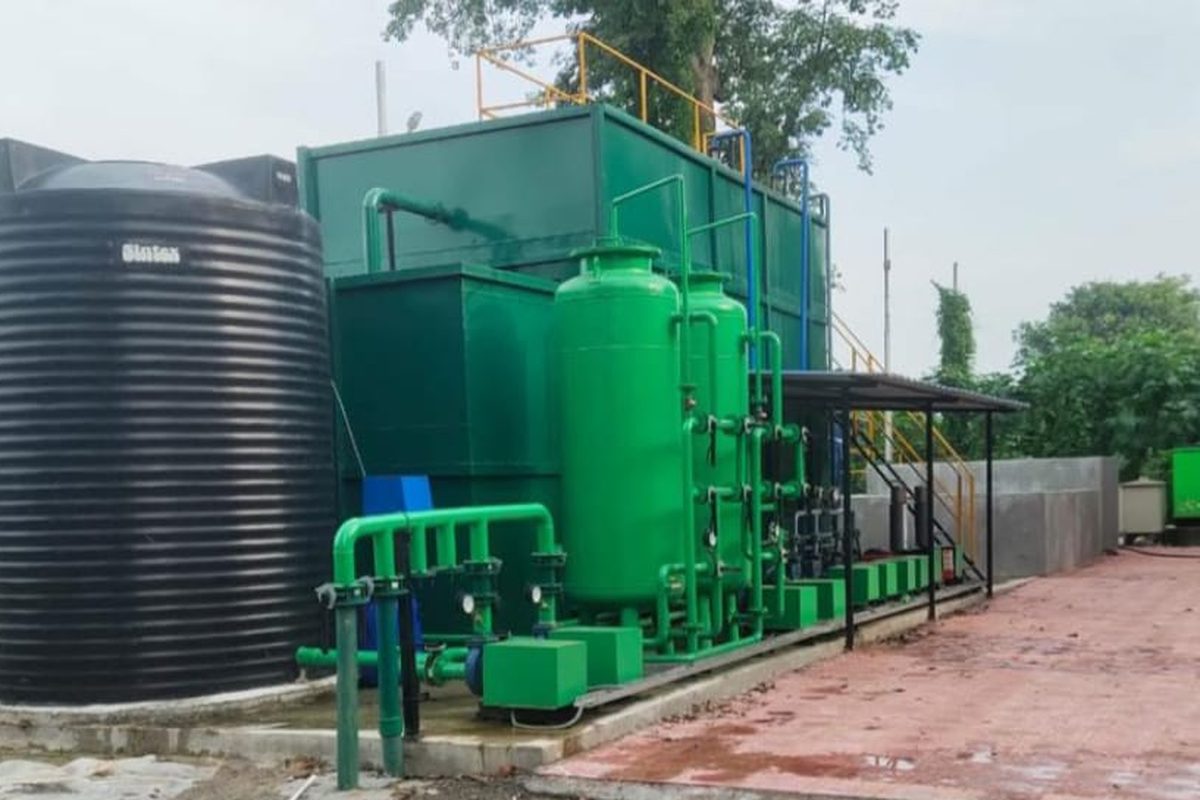
Sewage treatment
Waste water treated on site and returned for flushing, gardens and cooling.
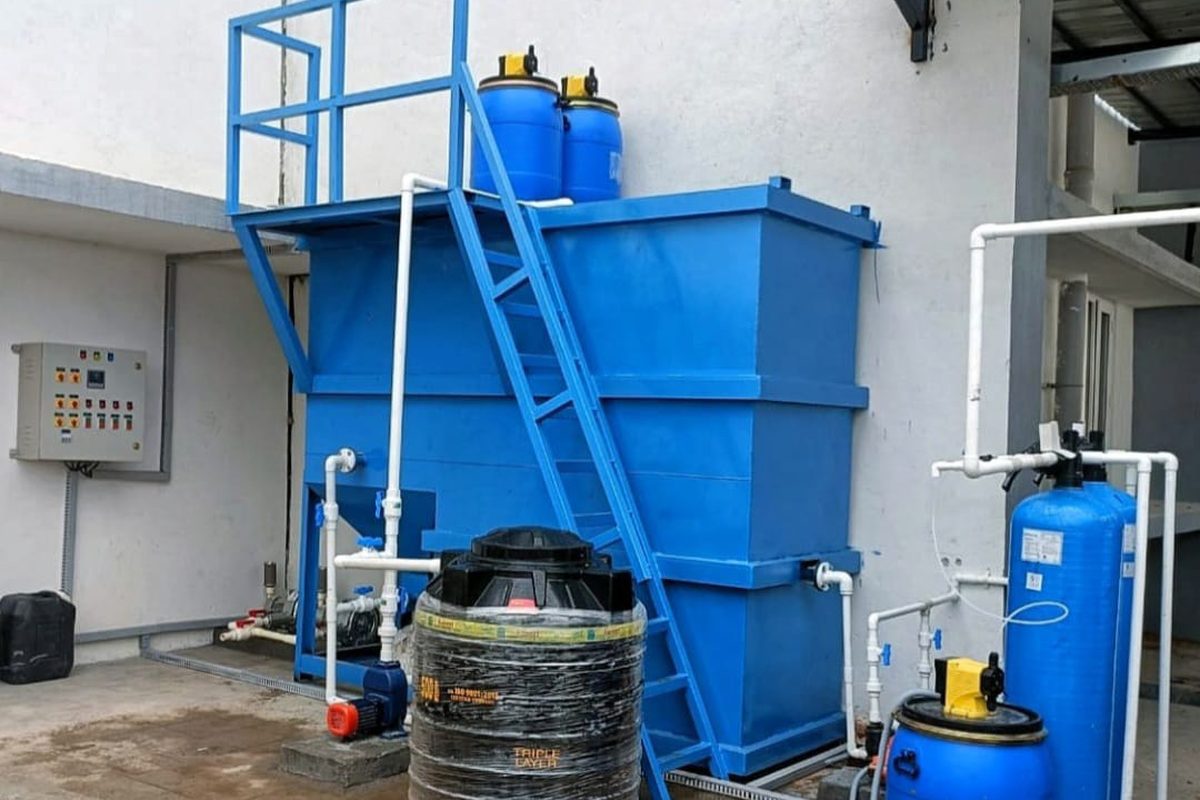
Built above ground or below it. Where there is no plot to spare, the tanks go underground and the space above stays usable. Treated water is reused on site rather than discharged, which is usually where the plant pays for itself.
Where it is used
- Residential and office campuses
- Institutional and defence establishments
- Hotels, clubs and hospitals
- Townships and group housing
| Capacity | 1.5 KLD to 2 MLD |
|---|---|
| Construction | RCC, modular, or underground FRP tanks |
| Treated water used for | Flushing, horticulture, cooling make-up, washing |
| Operation | Automatic, with remote monitoring available |
25 LPH to 100+ m³/day
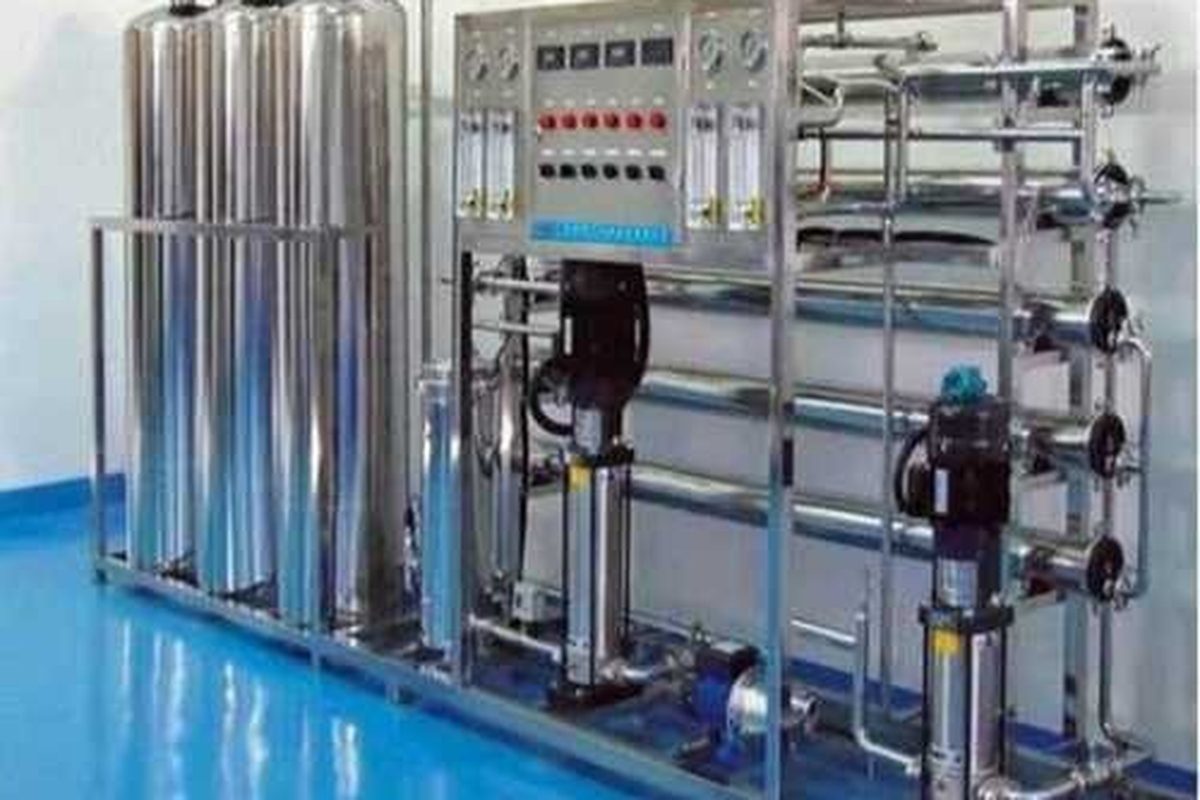
Reverse osmosis
Hard, saline or high-TDS water made fit to drink or to run a process on.
Sized against a laboratory analysis of your water, never from a catalogue. The reject stream is recovered for flushing and gardens wherever the site allows it.
Where it is used
- Campus and canteen drinking water
- Process and boiler feed water
- Borewell supplies high in salts
- Pharmaceutical and food production
| Capacity | 25 LPH to 100+ m³/day |
|---|---|
| Removes | Dissolved salts, hardness, nitrate, fluoride, heavy metals |
| Pre-treatment | Filtration, carbon and softening as the water requires |
| Reject water | Recovered for flushing and horticulture where possible |
50 LPH to 16 KLD
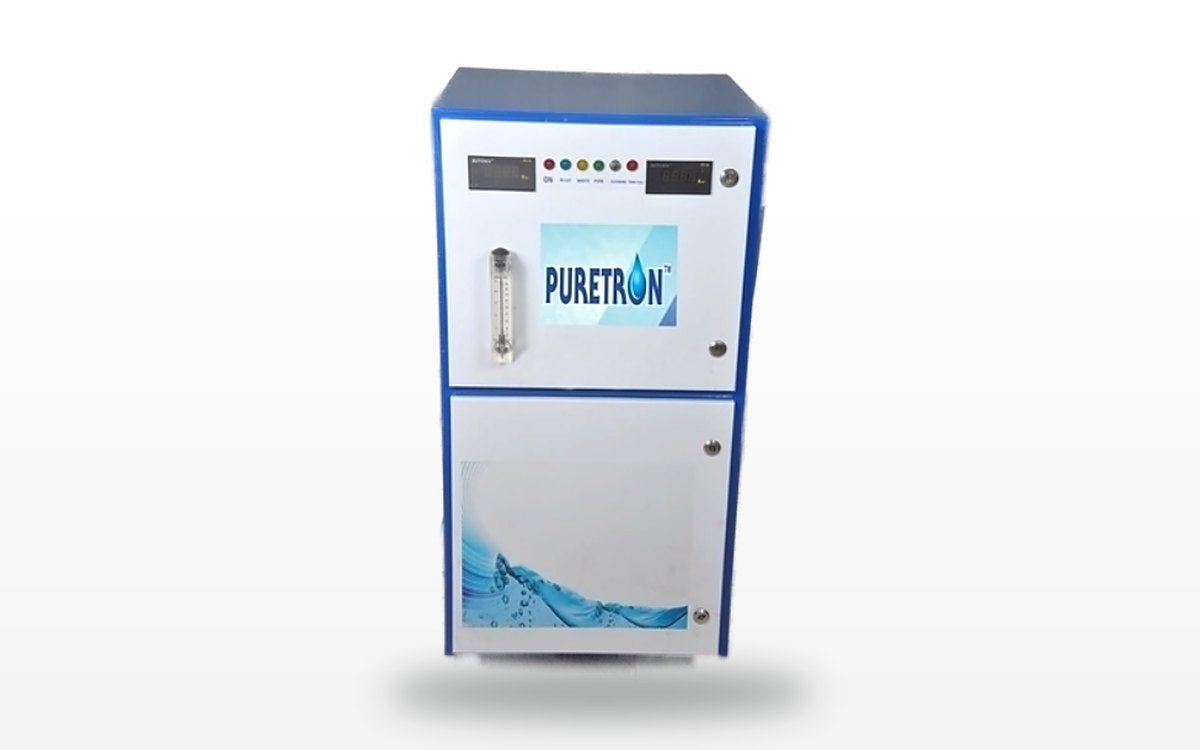
Electronic purifiers
Drinking water that keeps its minerals and wastes far less than a standard plant.
Where the supply is only moderately salty, this recovers far more of the water than a conventional plant and leaves useful minerals in rather than stripping everything out. No membranes to replace and no dosing chemicals.
Where it is used
- Offices and institutional buildings
- Canteens and hostel messes
- Sites under water recovery norms
- Moderately salty municipal supplies
| Capacity | 50 LPH, 250 LPH, 500 LPH, and 6 to 16 KLD |
|---|---|
| Water recovered | 75 to 90 per cent of what goes in |
| Suited to | Supplies up to 1,500 ppm dissolved solids |
| Consumables | No membranes, no dosing chemicals |
Point of use to plant scale
Filtration and softening
Turbidity, iron, chlorine and hardness taken out before they cost you equipment.
Hard water scales pipework, chokes heat exchangers and quietly raises fuel bills. This is the least glamorous part of a water system and the part that most often decides what the rest of it costs to run.
Where it is used
- Protecting boilers and cooling towers
- Stored water in tanks and sumps
- Iron staining from borewells
- Pre-treatment ahead of other plant
| Filtration | Turbidity, suspended solids, iron and chlorine |
|---|---|
| Softening | Hardness removed by ion exchange, regenerated automatically |
| Demineralisation | For process and boiler duty |
| Vessels | FRP or steel, manual or automatic operation |
Building to municipal scale
Disinfection
Water kept safe from the plant all the way to the tap, without stored chemicals.
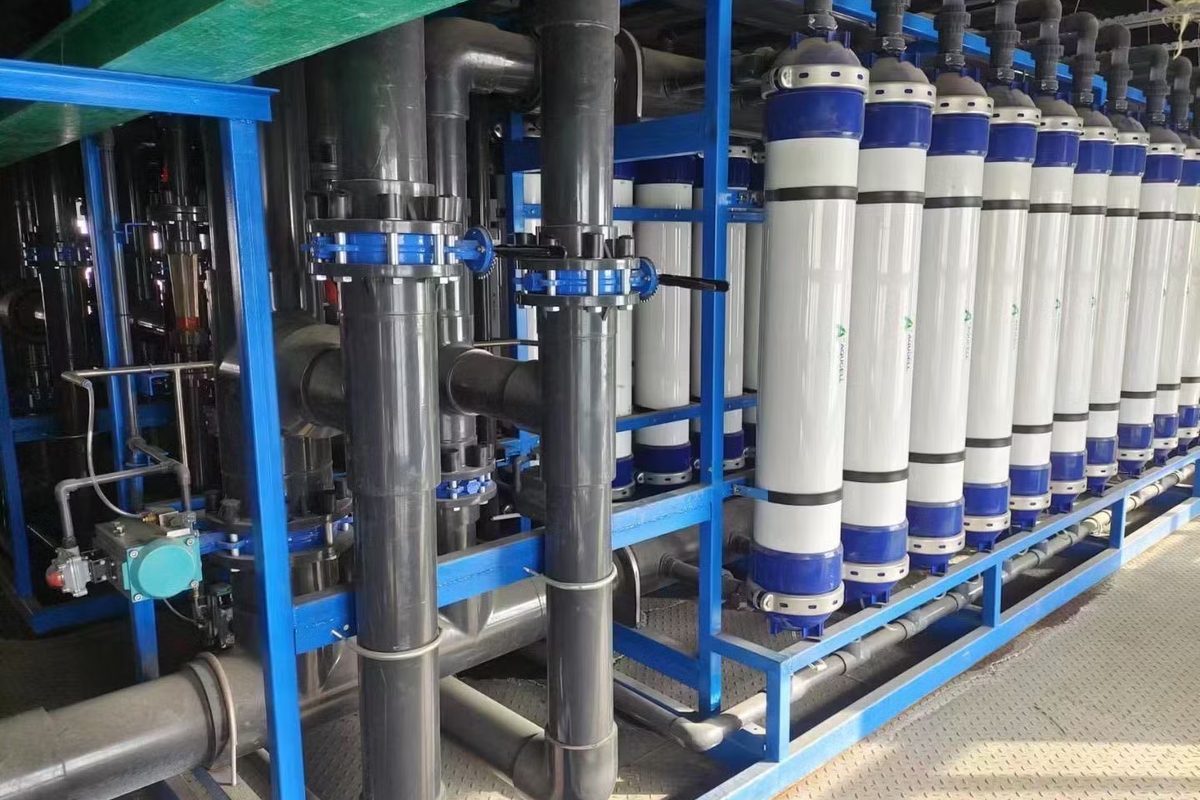
Treatment protects the water at the plant. Disinfection keeps it protected through the tanks and the pipework, which is where most contamination actually happens. Systems are available that need no chemical deliveries at all.
Where it is used
- Campus drinking water networks
- Stored water in tanks and reservoirs
- Sites that cannot store chlorine
- Existing systems needing a retrofit
| Methods | Ultraviolet, ultrafiltration, and inline electrochemical |
|---|---|
| Protection | Carried through storage and the distribution network |
| Chemical-free options | No chlorine gas, hypochlorite or salt stored on site |
| Fitting | Retrofits into existing pipework |
Single pump to full plant room
Pumping and boosting
Pressure where it is needed, from the pump room to the top floor.
Pumps, motors, boosting sets and the electrical work that drives them, plus the swimming pool systems most contractors hand to someone else.
Where it is used
- Hydro-pneumatic boosting systems
- Pump rooms and motor control
- Swimming pool circulation
- Water supply and drainage networks
| Boosting | Hydro-pneumatic systems sized to the building |
|---|---|
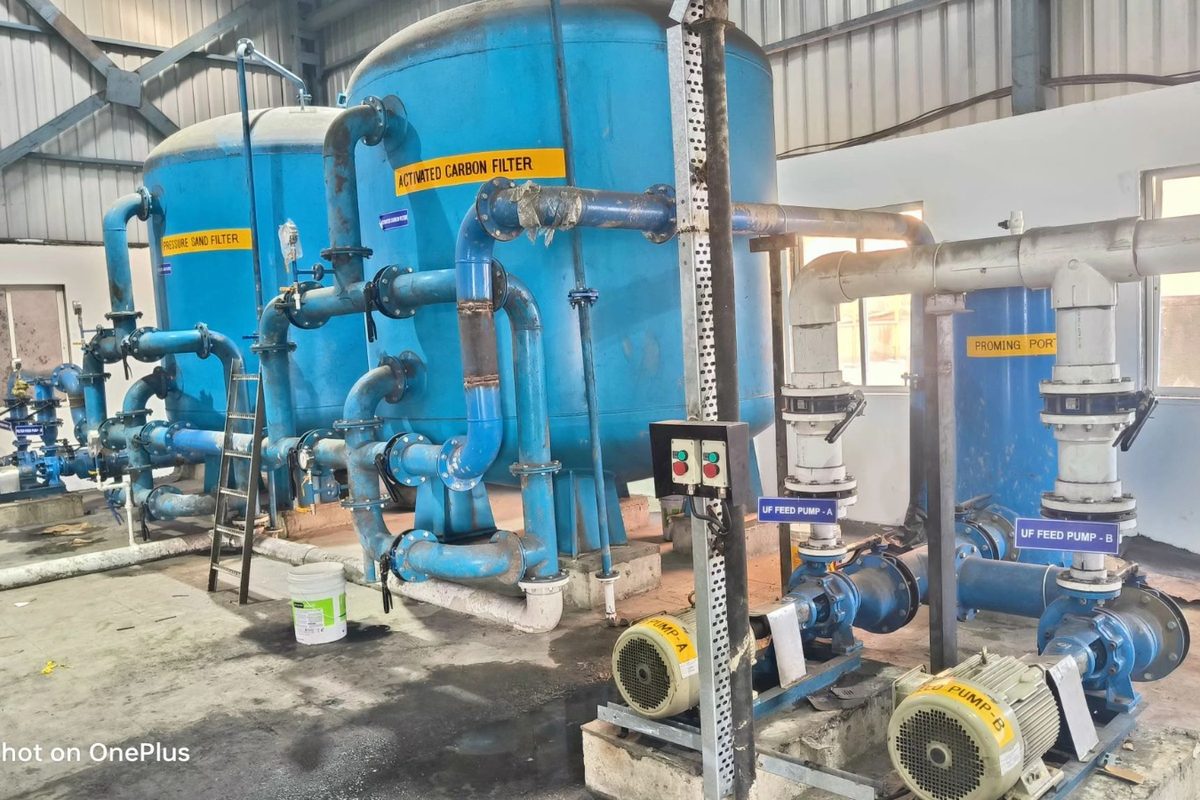
| Pump rooms | Pumps, motors, panels and pipework |
| Swimming pools | Circulation, filtration and maintenance |
| Electrical | Motor control and starter panels, tested before handover |
Choosing
How the right system gets chosen
Start with the water
A laboratory analysis decides the technology. Anything specified before that test is guesswork.
Then the end use
Drinking water, boiler feed, cooling and flushing are four different specifications. Over-treating costs money forever.
Then space and load
Footprint and access decide what can be built. Peak demand decides whether it will hold up.
Then who runs it
We match the system to the attention it will realistically get after handover.
Send us a water analysis and we will size the system.
If you do not have one, we will arrange the test. Either way you get a written recommendation with the system, the capacity and the reasoning behind it.